
Stop-Motion Stories and the Fingerprint We Leave Behind
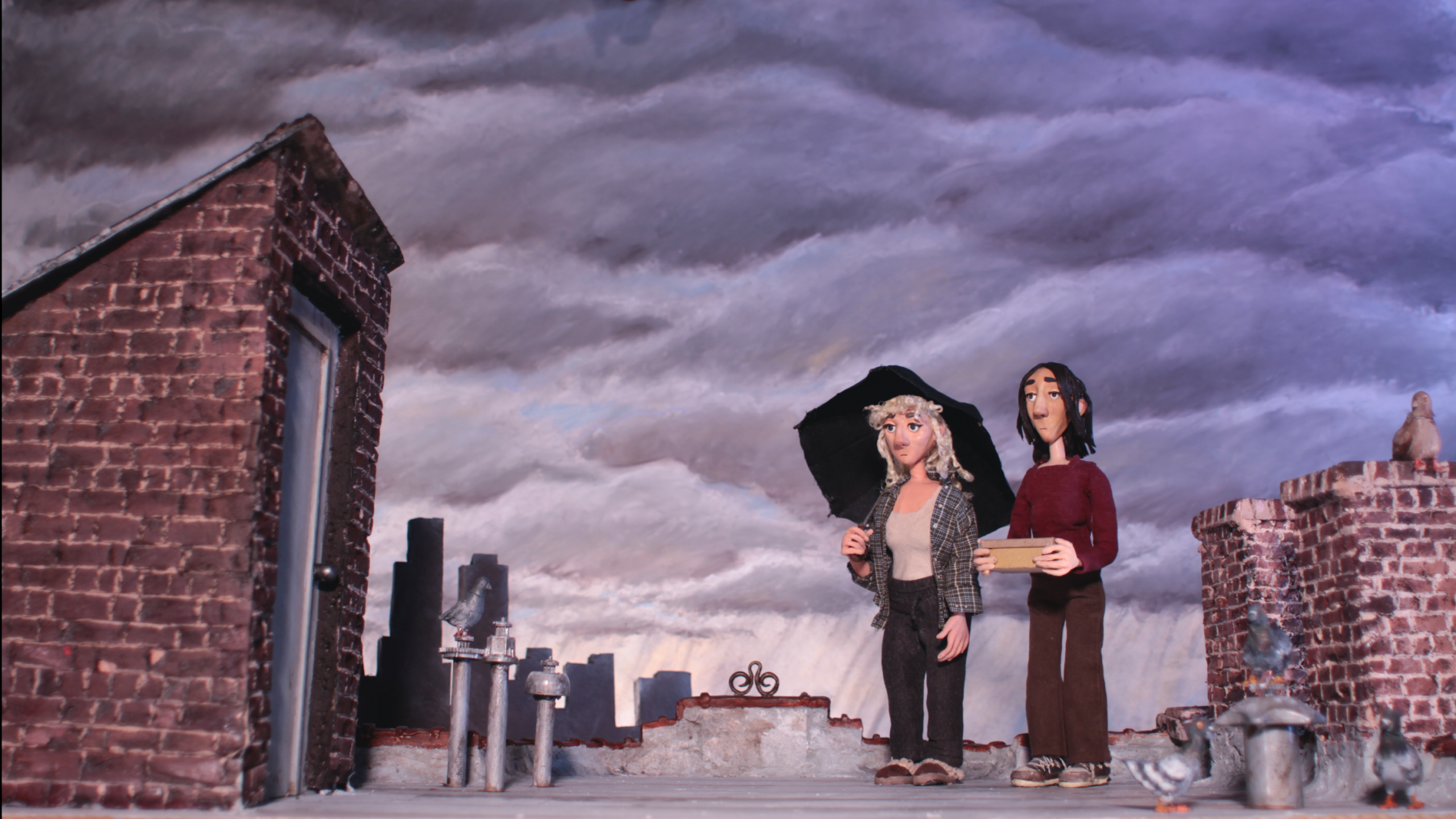
Maybe you’ve heard the phrase “A Bird Hit My Window and Now I’m a Lesbian” already, or maybe you’re scratching your head wondering what on earth that could possibly mean. Either way, this attention-grabbing quote is the topic of online discourse throughout the queer art community, thanks to two budding artists determined to tell their stories in their own way.
AJ Dubler and Carmela Murphy are current Denver resident artists and recent graduates of The Art Institute of Chicago, where the duo met in a puppet animation class. Within the world of stop motion, the mind often goes directly to claymation, the medium behind many cultural favorites such as “Wallace and Gromit” and “Coraline.” Puppet animation however, refers specifically to stop motion with figures made from many different mediums, and is the catalyst for the very promising art careers of these two creatives.
“A Bird Hit My Window and Now I’m a Lesbian” is a stop-motion film born out of Dubler and Murphy’s thesis project. Despite the semi-optional nature of the project with their program, Dubler and Murphy’s passion pushed them to complete the film and publish it with the personal goal of securing a spot in at least one film festival. Since its release in October 2025, the film now sits at over 800,000 views on YouTube. It’s been played in multiple festivals, winning multiple funding awards. Needless to say, Dubler and Murphy made something special.
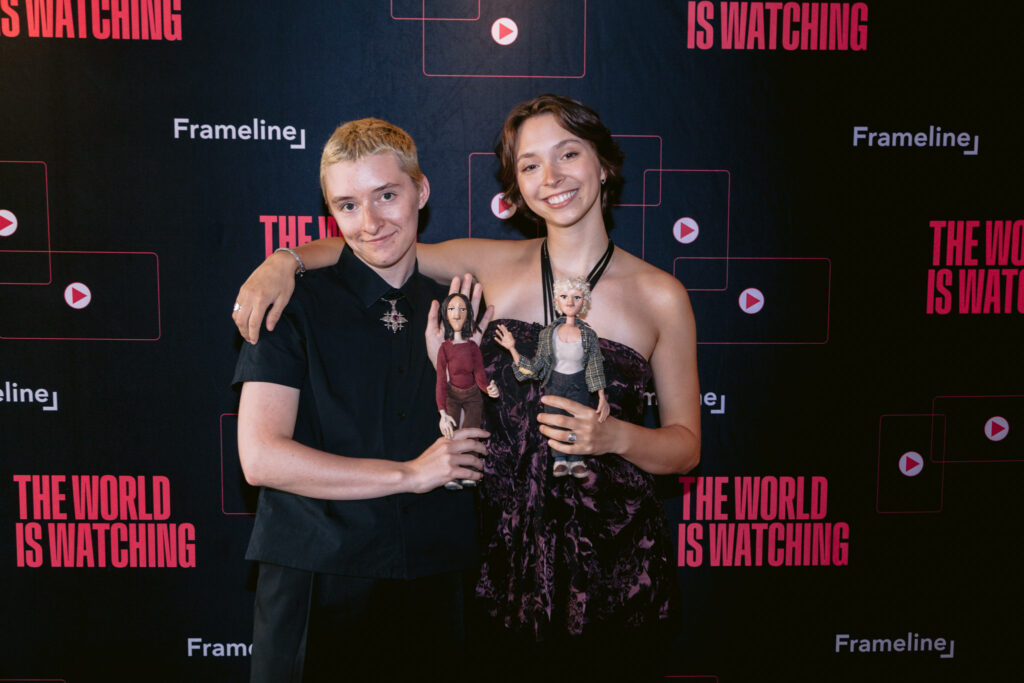
After releasing the film’s trailer, Dubler and Murphy were hit with a tidal wave of 1.8 million views. This compelled them to focus on continuing the momentum the trailer alone built. Social media strategy and behind-the-scenes videos became a part of the artists’ every day in a very new way, alongside a spotlight from the public eye.
The correlation between social media and art careers is undeniable. Similarly, working in such a tactile field alongside the rise of AI and a strengthening digital world, is complex when it comes to art. Fresh out of college and officially in the intimidating job market, Dubler and Murphy are taking all these aspects in stride.
“With every movement, there’s a counter movement. AI is going to grow, and I’m sure take over in some ways, but I think people want to see art made by humans, and they want to see the process,” said Murphy. “That’s what’s been really special about our process videos, even more than our finished things. That’s something AI can’t replicate… In some ways, I think we’re doing our own little counter movement with stop motion, where every single thing that’s seen on screen exists in real life. We’ve touched every little detail.“
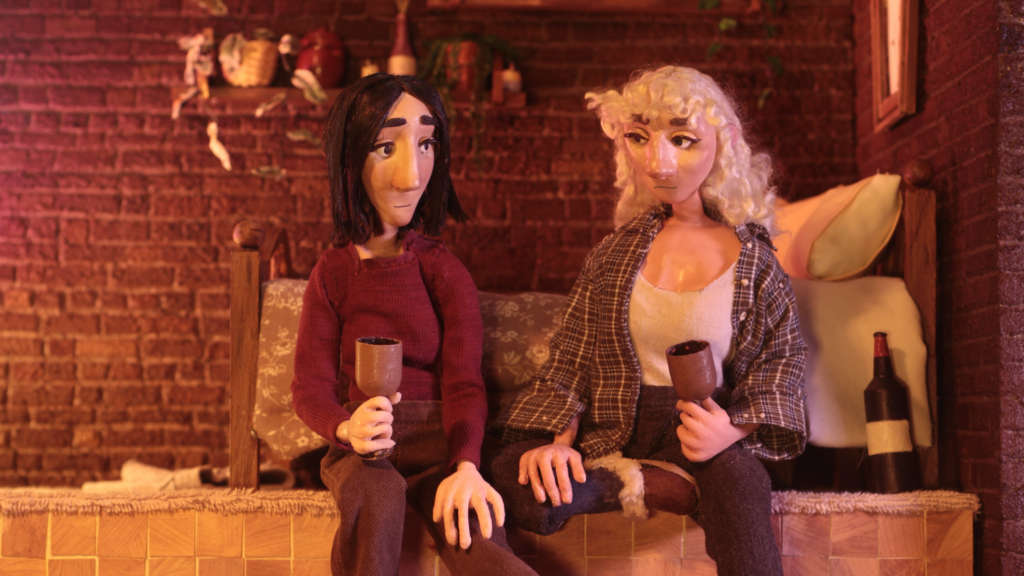
“AI can replicate the look of stop motion,” said Dubler, “but I think people, even if they don’t consciously know the difference, can feel it. Having us visible on social media is really important for people to know who made this and how they made it.”
Now that Dubler and Murphy officially have a studio in RiNo and are entering the building stages of their next film, the duo is thrilled to open up their space to community workshops and open studio days. Sharing their art world with any who are interested is at the core of their plans.
“Showing people how we do [stop motion] removes some of the barriers,” highlighted Murphy. “Seeing the flaws, seeing the fingerprints, seeing the human elements in it, makes it more special. So that’s one of our main intentions with putting things out.”
The intimacy of stop motion projects and the time consuming nature likely both contribute to the lower frequency of production, and though stop motion doesn’t have a specific cultural hub geographically, it is still an ever growing art form. Craft and puppet lovers surely know just how many creative choices must be made to put a stop-motion film together.
“You have to think about every little detail,” emphasized Murphy. “When we were first animating, we got feedback that our pinkies weren’t moving enough, or we weren’t moving the fingers in the right way… The stop motion people I know are some of the most talented artists I’ve ever met. You do have to be very well rounded and do a lot of different things.”
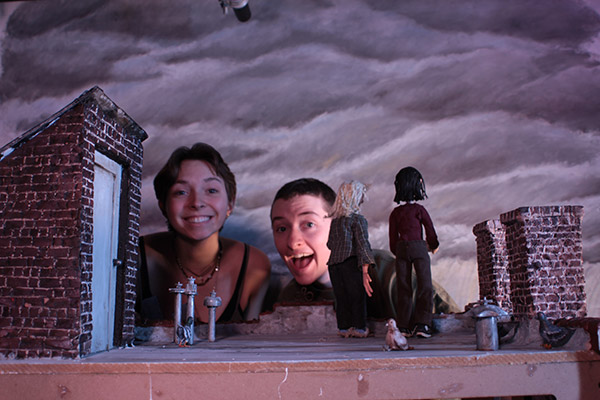
Though the film runs at about eight minutes long, the realities behind its creation add up to nearly two years of work, in addition to Murphy’s rough composition of the idea, drafted a year prior. Within the greater process, the pair spent four months animating after all the sets and puppets were built. The film is shot at twenty-four frames per second, meaning each puppet and set was moved and photographed twenty-four times for every second of the film. As you can imagine, all those little seconds add up.
“You have to be willing to close yourself in a dark room for 12 hours a day,” said Dubler with a laugh. “We only had one stop-motion class at our school, and I think stop motion is all about problem solving. There’s not a lot of industry standard practices. There are some, but it’s kind of just whatever works, works.”
The move to Denver after graduating served as an important step towards the greater goal of being artists full time. Living at home to save on expenses and working dutifully on grant and kickstarter campaigns, both Dubler and Murphy are fully committed to their film making dreams.
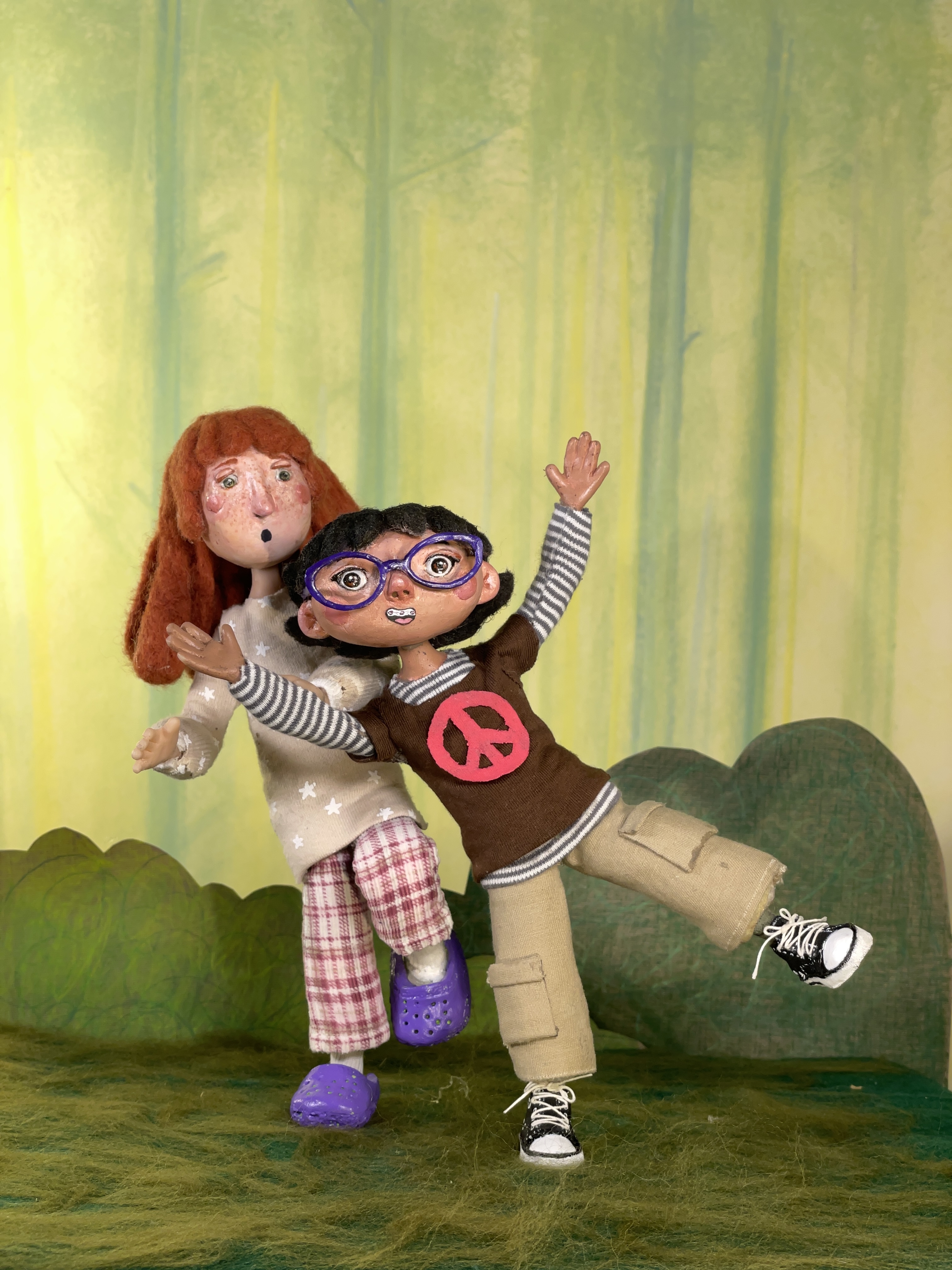
“We’re primarily making art for queer people. Our next film is about two queer middle school girls who start a religion and explore that dynamic they have, that a lot of queer people experience in middle school,” explained Dubler. “Something we found with our last film is so many people who aren’t gay and don’t have any experiences like that, still resonated with it.”
The massive audience Dubler and Murphy’s film resonates with speaks to the desire for creative work that so many feel right now, as well as the emotional depth of the film itself. Visual depictions of emotions through the unique textures the film incorporates and visual metaphors is so unique to the project and so distinctively captivating.
“Our original film wasn’t really for anyone. We weren’t making that film with the intention of it going viral,” said Murphy. “We’re learning how we want [our art] to be for the people, but also, how to keep it for us. How do we make something that we’re really excited about? Something that we really love?”
All in all, these two fresh faces on the stop-motion scene are sure to keep making waves and keep representing the emotional rollercoasters of queer life. Stay on the lookout for upcoming workshops or events as Dubler and Murphy work on their next film and shape the Denver art scene one puppet at a time.
Donations can still be made to support the up-and-coming film, “God Is A Pelican,” here.

Victoria Glidden
Born and raised in New Hampshire, Victoria is on a mission to explore nature, art and music. After obtaining her degree in literature, philosophy and religious studies at Willamette University, Denver seemed like an obvious destination and has proven to be quite the home. Victoria is deeply connected to the music scene in the city and is always on the hunt for new music.