

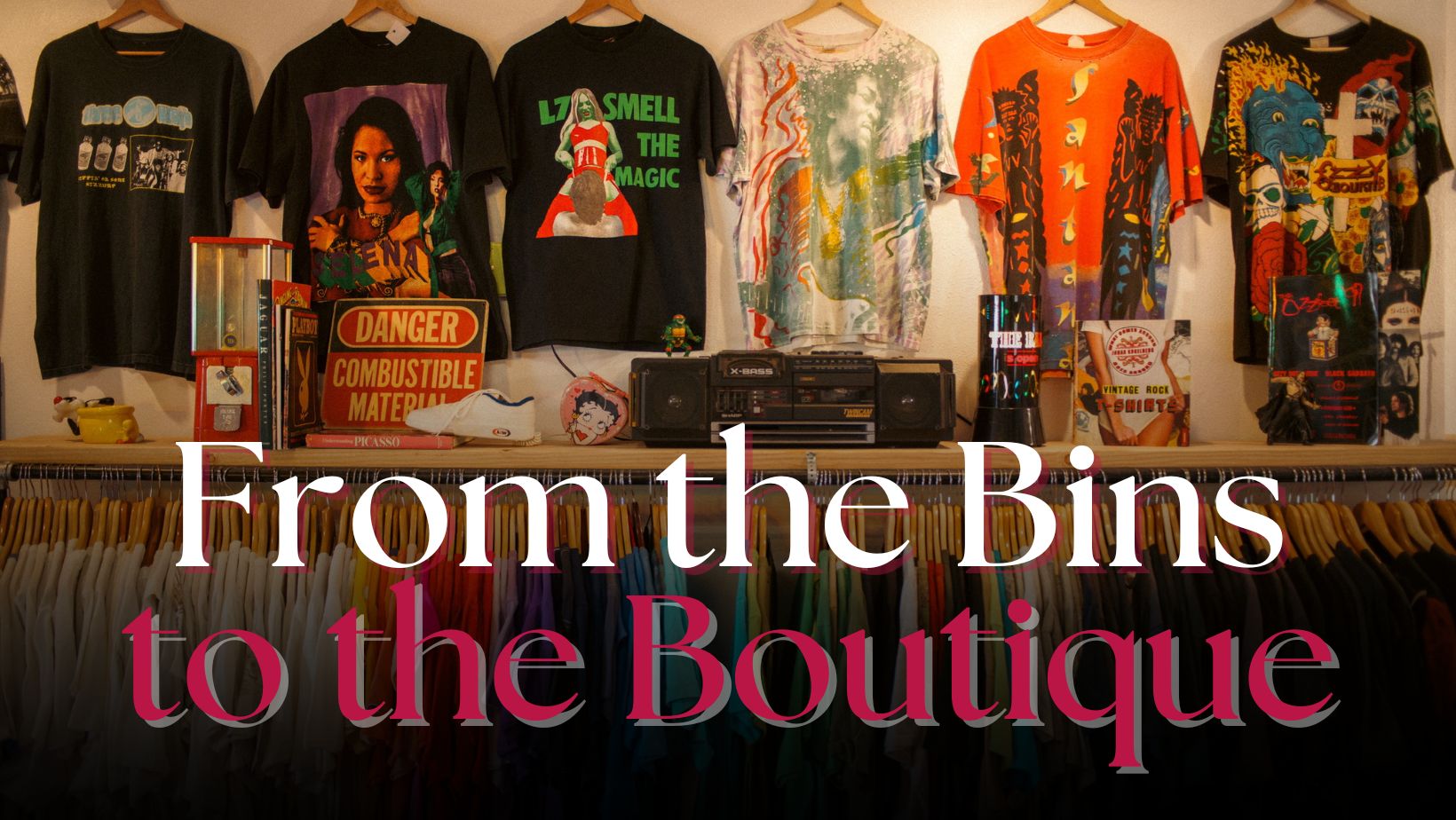
From the Bins to the Boutique: Ethics, Equity and the Secondhand Economy
Photography by Jordan from @cuttingboredcameras
In a climate where fast fashion’s environmental toll is under increasing scrutiny, the act of “flipping” a $2 thrift store find for a $50 markup has sparked a heated cultural debate. While critics argue that resellers are stripping affordable resources from low-income communities, industry professionals suggest that maybe the “villain” isn’t the local entrepreneur, but a combination of corporate price gouging and a global surplus of textile waste.
For Gabby Smith, owner of the Denver-based vintage shop GoodKid, the jump from a $2 purchase price to a $50 resale tag isn’t about exploitation, but more so the labor inherent to the curation process. Smith explained that pricing must account for the time spent sourcing, cleaning and repairing garments.
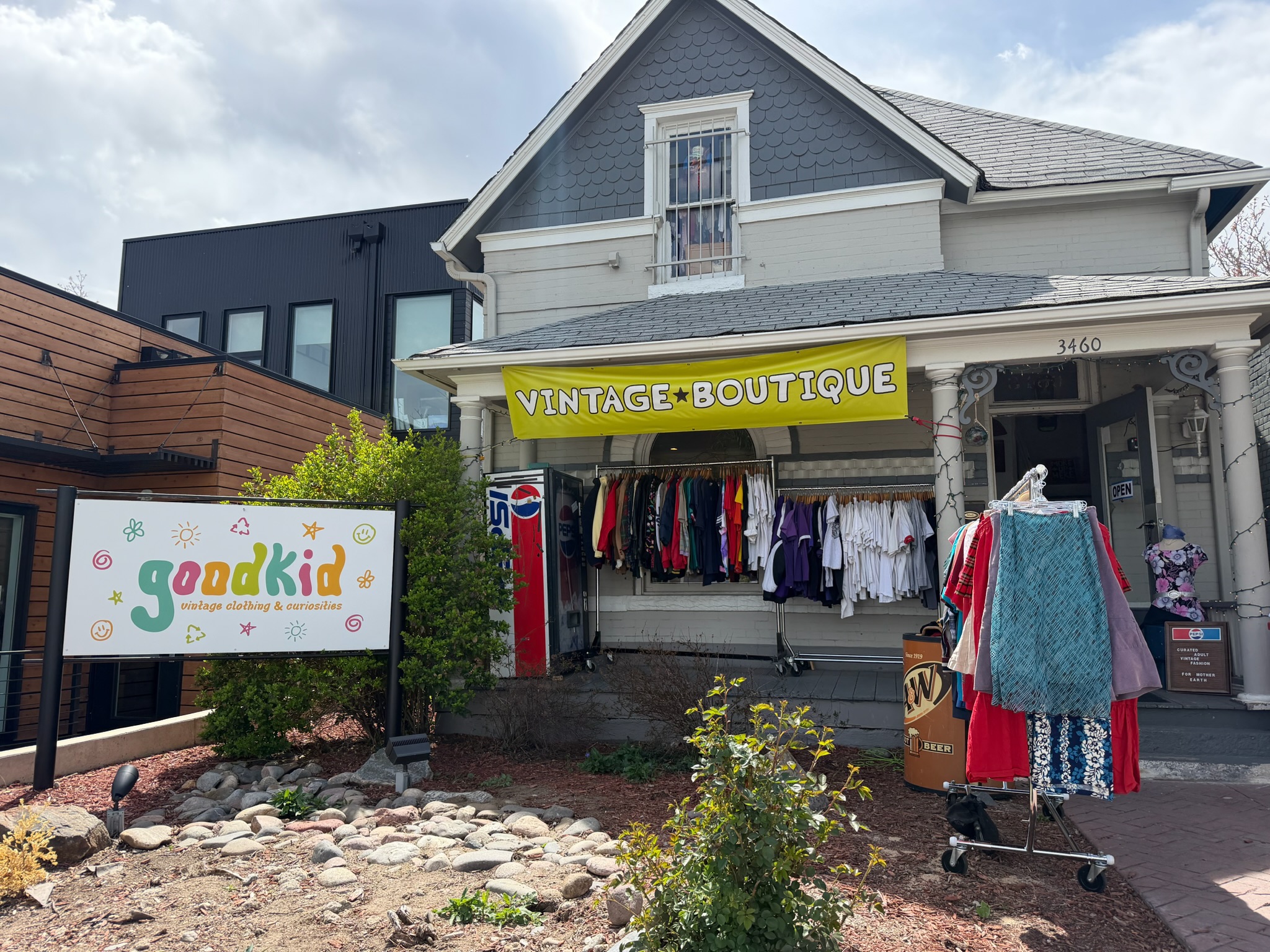
“You have to consider your time and efforts—whether you have to treat things or obviously just wash them in general—and then if you have to do any repairs,” Smith said. “Aside from that, pricing comes from just researching and learning the history about that specific item.”
The rise of reselling as a mainstream hustle and business opportunity has coincided with price hikes at major charitable retailers like Goodwill and Arc Thrift Stores. However, Smith pointed out that blaming resellers for these increases overlooks the internal decisions of these billion-dollar organizations.
“A lot of people will make the resellers the villain when in reality, the CEOs of these companies are making seven figures every year,” Smith noted. “I think that they need to reconsider their price gouging so that people of all economic backgrounds can actually afford to shop at thrift stores because that’s how a lot of people survive.”
Smith even shared a recent experience at a local thrift store where a $5.99 price tag had been slapped directly over a previous $2.00 sticker.
Beyond the economics, resellers can be a vital link in the environmental chain. By presenting secondhand clothing in a curated boutique setting, shops like GoodKid entice consumers who might otherwise be deterred by the disorganized and chaotic reputation of traditional thrift bins.
Curated, vintage stores have become an avenue for people that wouldn’t otherwise think to shop secondhand. “It is a habit you have to start to form,” Smith said.
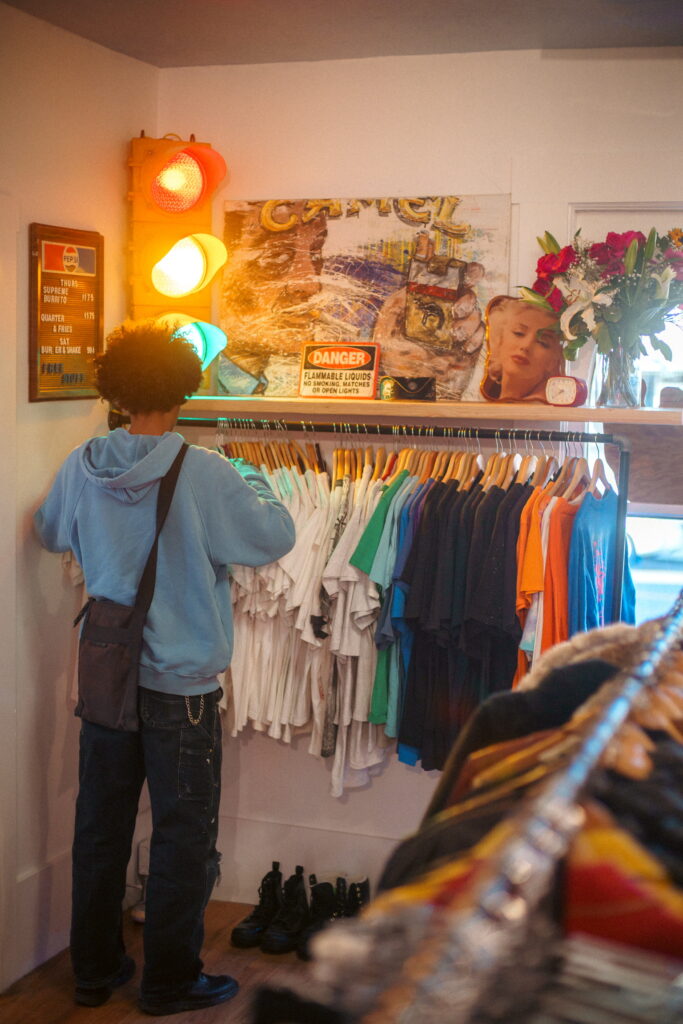
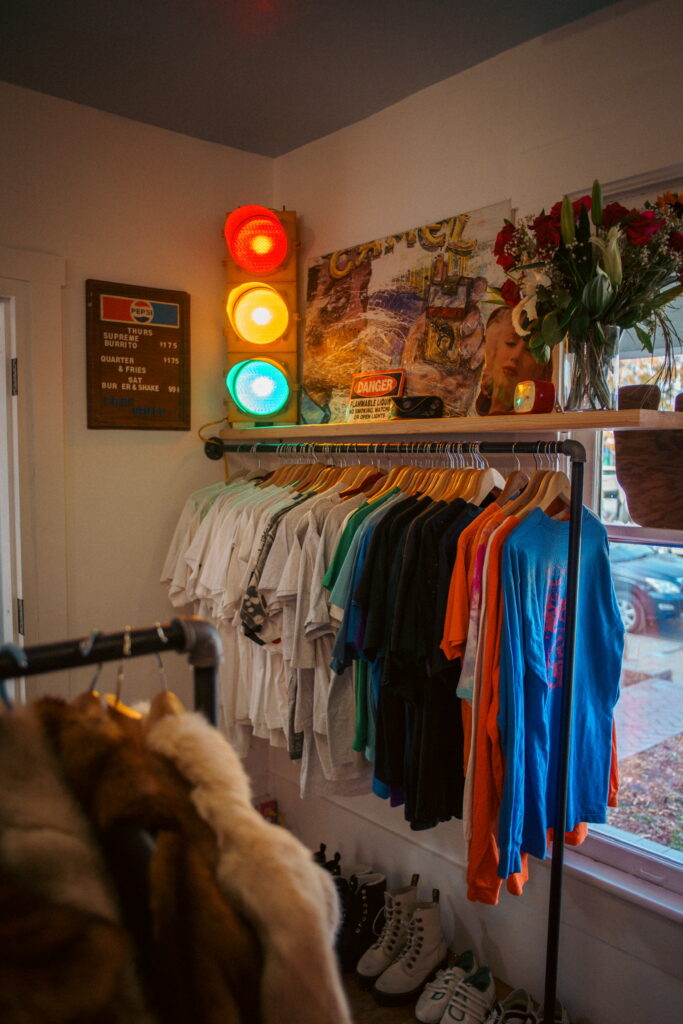
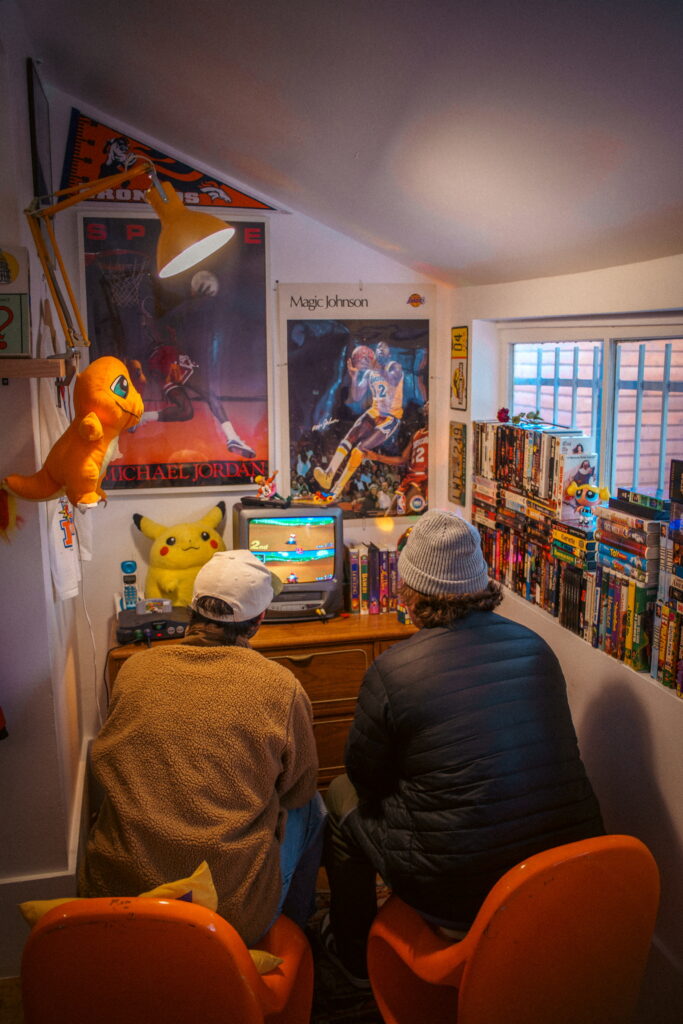
Before starting GooKid, “I was shopping at Forever 21 and H&M because I didn’t know any better,” Smith continued. “But once I started to understand the impact that fast fashion has on not only the people making it but also on the environment, I was like, ‘Okay, got to be another way to clothe myself.'”
To maintain ethical standards, there are ways resellers can ensure their sourcing strategies aren’t taking away from essential goods. GoodKid, for instance, focuses on items 20 years or older with historical value or interesting shapes and cuts, intentionally leaving everyday basics and children’s clothing for those who shop out of necessity.
Additionally, the shop is exploring ways to give back to the Hispanic community in its gentrified neighborhood. GoodKid partners with local organizations like Growin’ Paynz, which supports individuals recovering from addiction. A portion of their sales are also donated to Immigrant Freedom Fund, a non-profit organization that pays ICE bonds for individuals in civil detention at the Immigration & Customs Enforcement facility in Aurora, Colorado.
“Finding those avenues where you can actually help your community instead of just giving it to Goodwill or Arc is a much better option,” Smith shared. “With those larger thrift stores, if they don’t sell it, then it’s probably going to the landfill, or it’s getting shipped out to another country.”
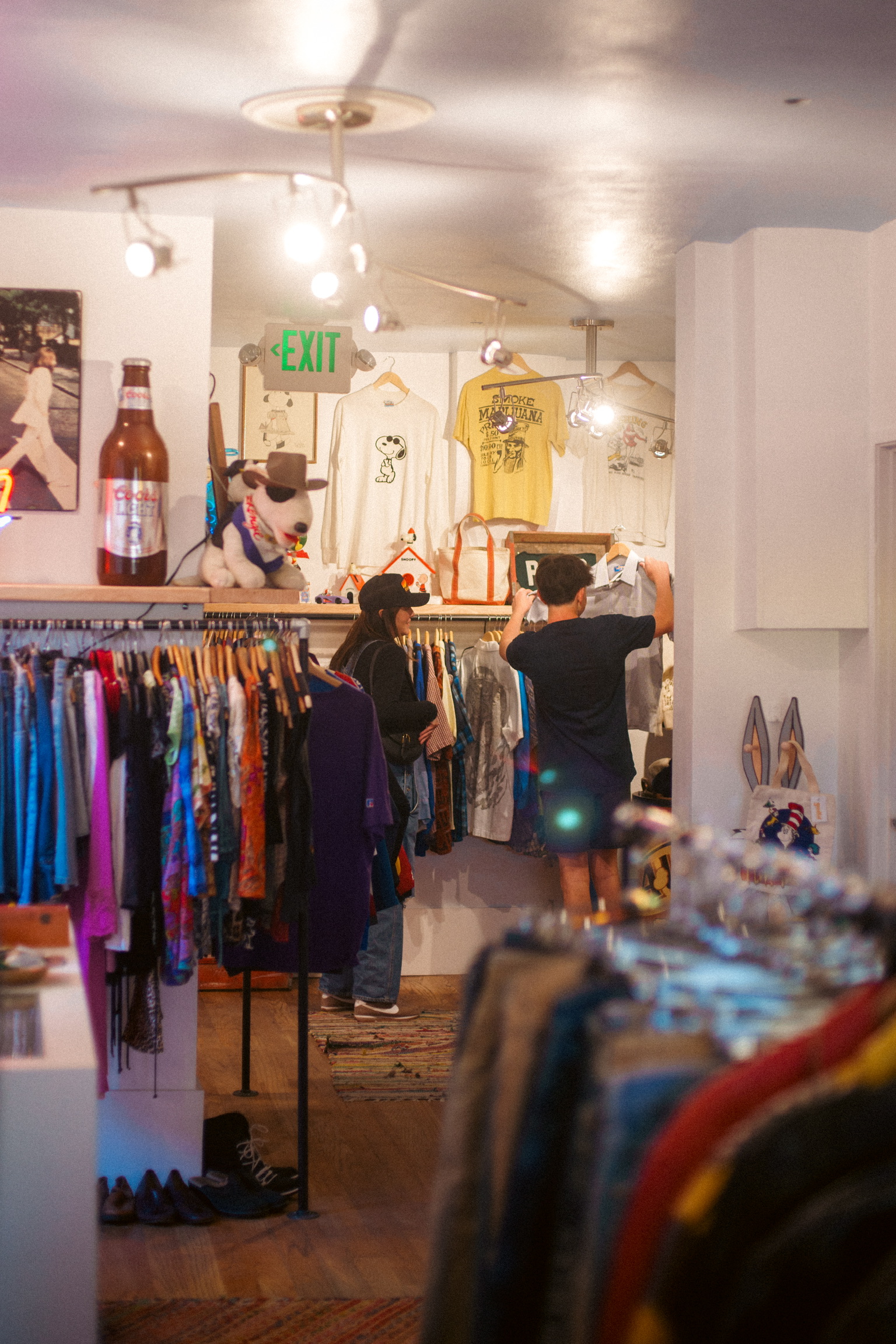
Smith’s advice for new resellers around the etiquette of sourcing is to “respect the space; if you drop something, pick it up and put it back. Be mindful of those shopping for survival rather than profit. And avoid aggression; no shoving, no pushing… It does feel like a race, but once you’re inside, just do your thing.”
Ultimately, the debate over thrift ethics isn’t as black and white as a price tag may suggest. For small business owners like Smith, the goal is to bridge the gap between environmental necessity and economic survival: proving that you can respect the hustle while still honoring the neighborhood that makes it possible. It is a delicate balance of acknowledging the gentrification of our shopping spaces while refusing to let usable garments end up in a landfill.
GoodKid Vintage is located in the Highlands at 3460 W 32nd Ave, Denver, CO 80211. Follow along on Instagram for store inventory and updates.