

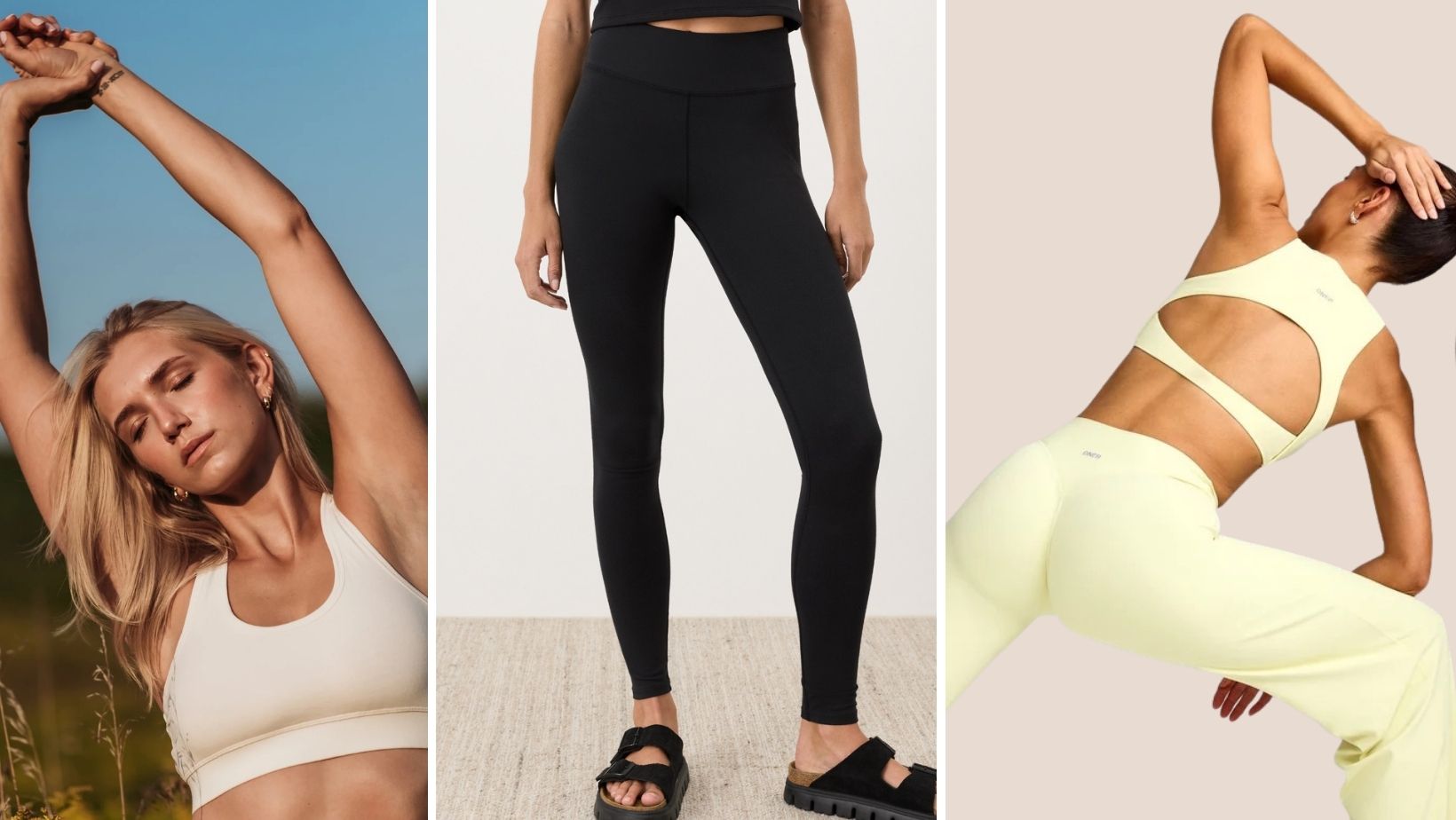
Is Toxic Activewear Killing Your Wellness Mantra?
Step one of joining the wellness community is initiation via workout set. Seemingly, when your life motto becomes to “be well” whether it’s pilates, biohacking, or getting in 10K steps a day, you will find that all of your retail shopping becomes dedicated to activewear.
After all, the aesthetic of wellness comes with a dress code. What isn’t being talked about, though, is that even if you’ve cut out processed food, blue light before bed, or starting the day before meditating, there could be toxins still getting into your body from somewhere you’d never expect: the same clothes that you wear in the name of being healthy.

The other day, I was on my daily doomscroll when I came across a TikTok promoting a “non-toxic sports bra” that sent me straight to the comment section to see if anyone else was thinking what I was: there’s such a thing as toxic sports bras?
To the surprise of me and half of the comment section, the answer is yes. It turns out, toxic activewear doesn’t just exist, but is way more common than you might think, with 73% of popular activewear in 2025 having been reported to have toxins.
So what does toxic activewear really mean, and what do we need to know before shopping? I did the research so you don’t have to.
Here’s your guide to shopping for activewear if you don’t want it to kill your wellness mantra.
What is “toxic activewear” and what are the effects?
As contradictory as it may sound, activewear has been reported to be the number one type of clothing that contains chemicals that can take a toll on your health. What you read on a label, like “sweat resistant” or “extra stretch,” might ordinarily urge you to add to cart, when really it should serve as a warning sign.
Here’s what you should look out for when buying activewear to make your retail decisions as healthy as your fitness decisions.
“Sweat-resistent” = PFAS
Not all fabrics are made equally. Some are inherently water-resistant, but most require added chemicals.
When you pick up a workout top that’s promoted as sweat-resistant, it often means it was made with PFAS (Per- and polyfluoroalkyl substances), the most common chemical found in activewear. PFAS are known for endocrine disruption, as they attach to nuclear receptors such as estrogen, androgen and thyroid receptors to block or alter hormones. This can affect reproductive, steroid, and thyroid hormones, and is even linked to cancer.
And if you think “I’ll just wash before I wear,” you thought wrong. PFAS are what’s known as “forever chemicals,” meaning, well, they’re forever. Even when they disappear from your closet and find their way to a landfill, they will continue to leak into the environment.
If your goal is to treat your body and this Earth with kindness, you might think twice when you see something labeled as sweat-resistant.
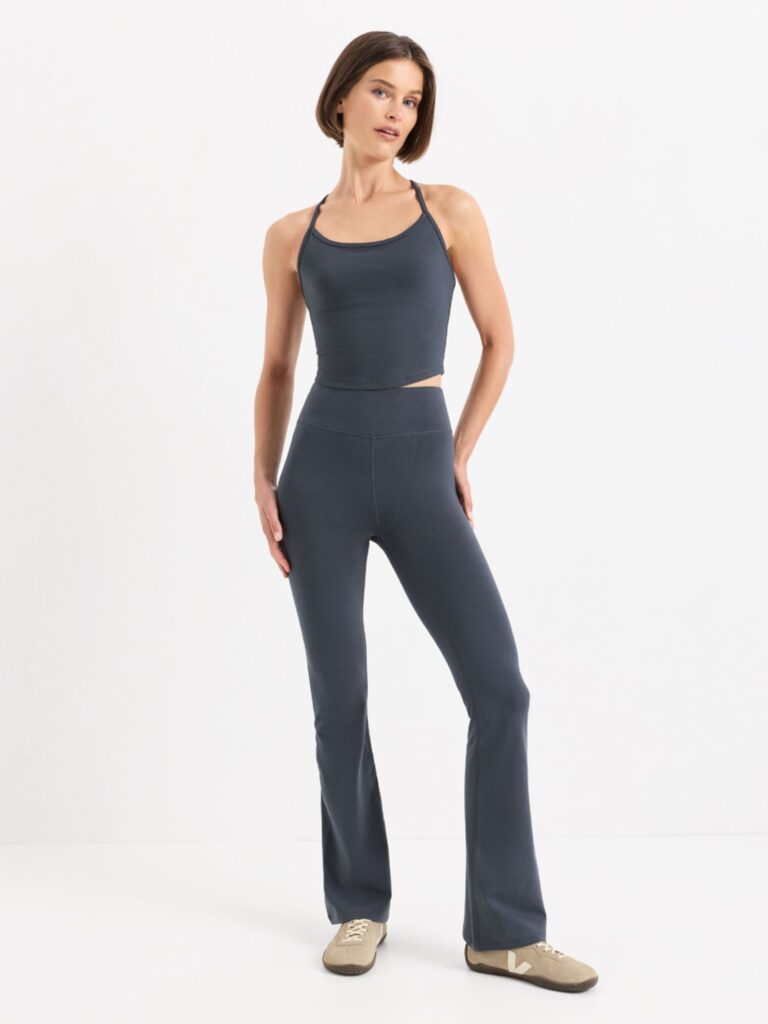
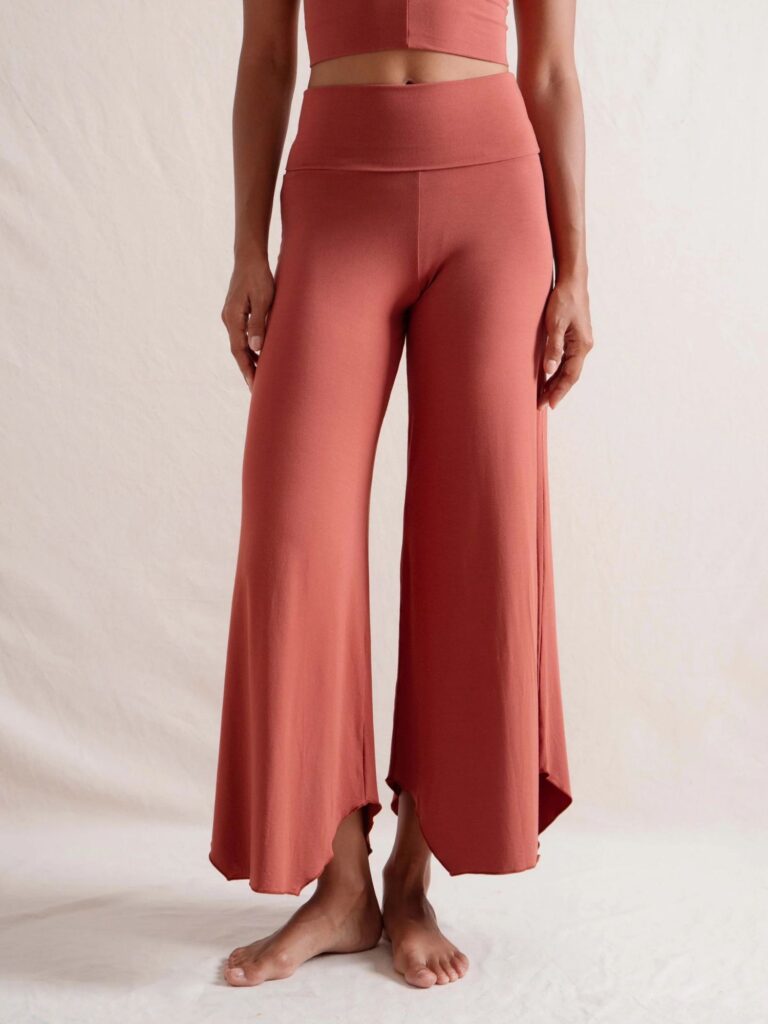
Activewear without PFAS


Stretch = BPAs
Nothing in this world is free, and that includes a little extra stretch in your activewear.
When you think of shorts with a nice stretch, you think of spandex. But when manufacturers want to cut costs at the expense of our health, they opt for synthetic fabrics and use BPAS to mimic the quality of stretch, moisture-wicking and dye-retention.
Like PFAS, BPAS are hormone disruptors and tied to cancer, additionally linked to metabolic and chronic illness, cellular risk and respiratory and immune effects. It was even found that BPAS are linked to asthma for teenage girls.
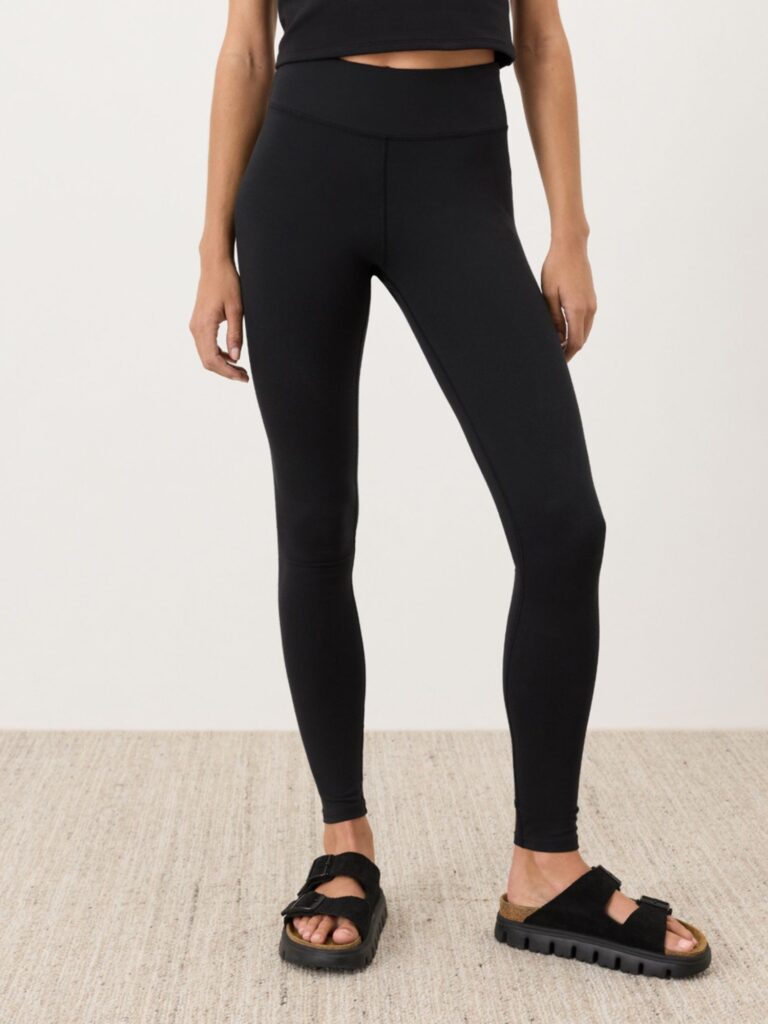
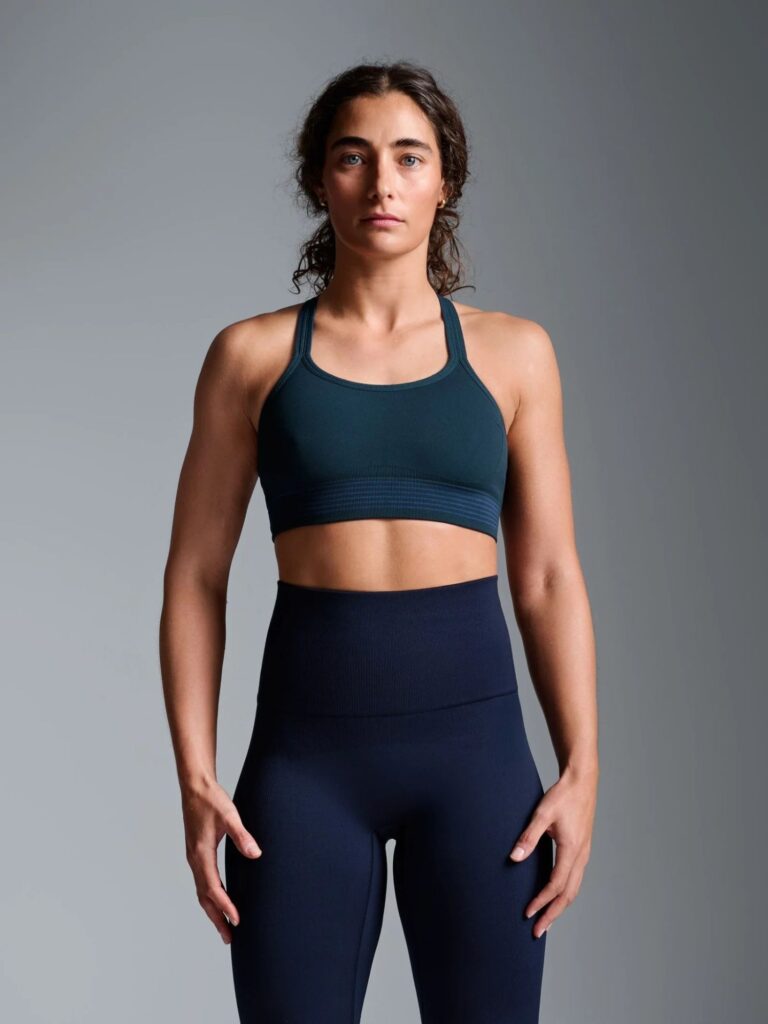
If you’re shopping for activewear that stretches without compromising your health, look for merino wool, organic cotton, TENCEL™ Lyocell, Low-percentage spandex, non-toxic elastics or 100% knitted natural yarn.
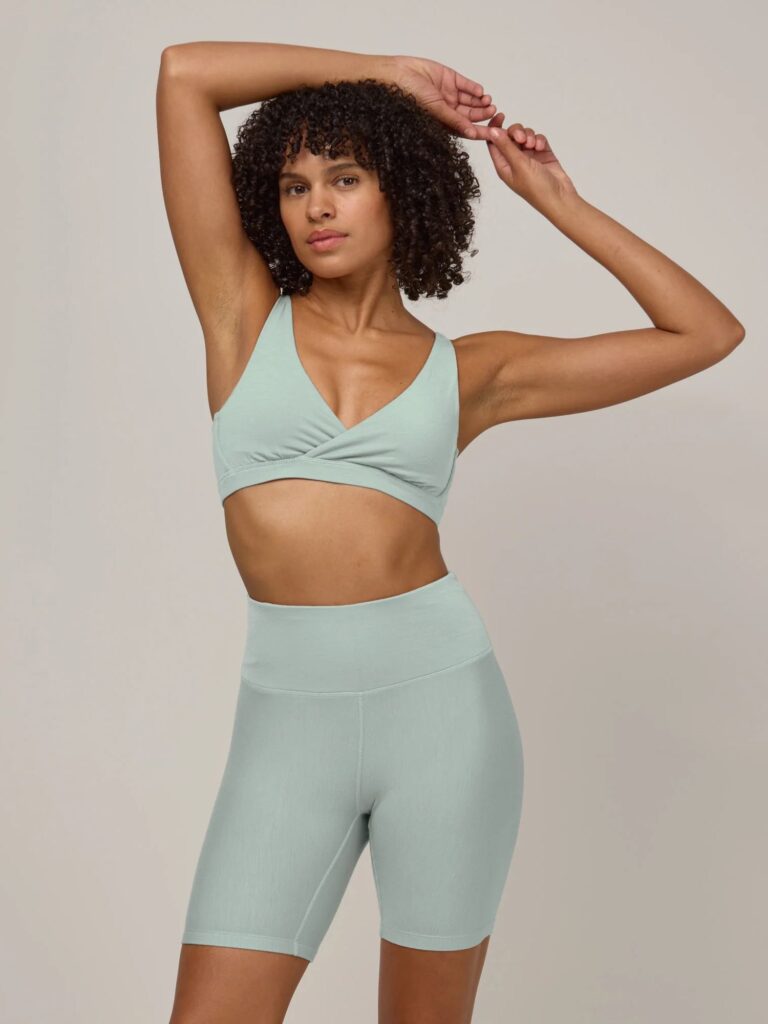
Activewear without BPAS

Performance-enhancing = Phthalates
Activewear that is promoted as “performance-enhancing” is made to minimize moisture, have targeted compression, thermal regulation, and maximum stretch for a full range of motion… thanks to phthalates, that is.
Phthalates are used to soften plastics in synthetic fibers and to prevent cracking on screen-print ink, but in turn also disrupt hormones, are linked to reproductive toxicity (and even development issues for children when worn during pregnancy), breast cancer and asthma.
Because they are used to essentially make plastic flexible, you can expect phthalates to be found in fast-fashion products or sometimes even products that are marketed as using recycled materials.
Phthalates are known as the “everywhere chemical” as they don’t stay committed to living in the fabrics, but instead can explore their way onto, and then into our bodies.
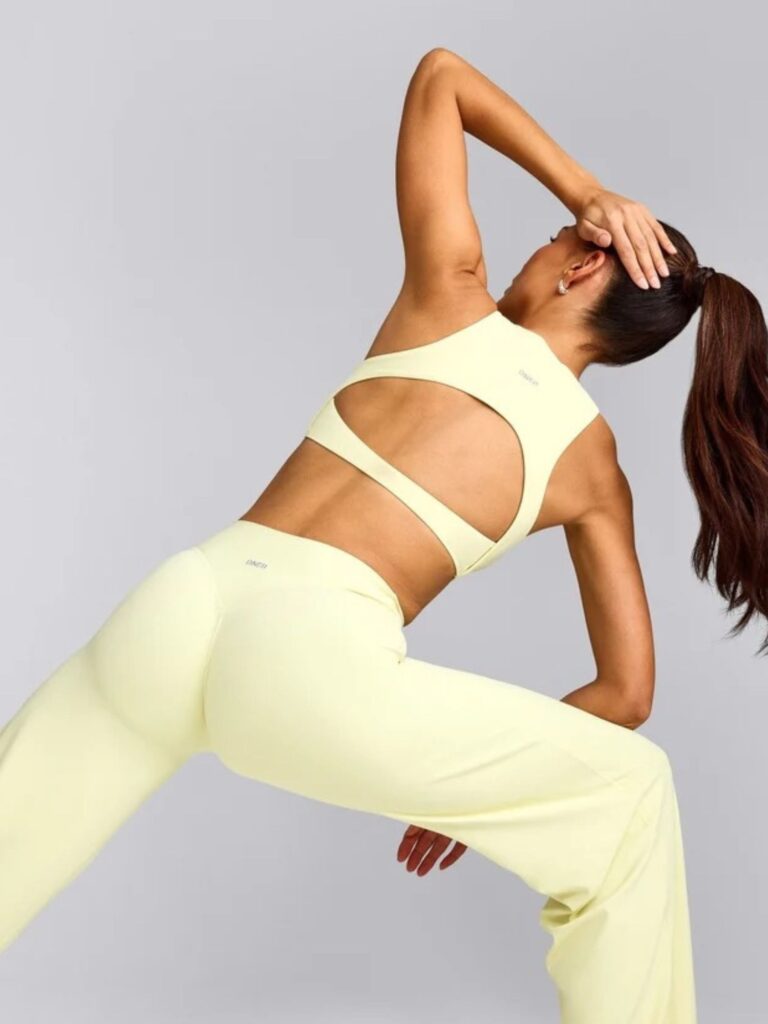
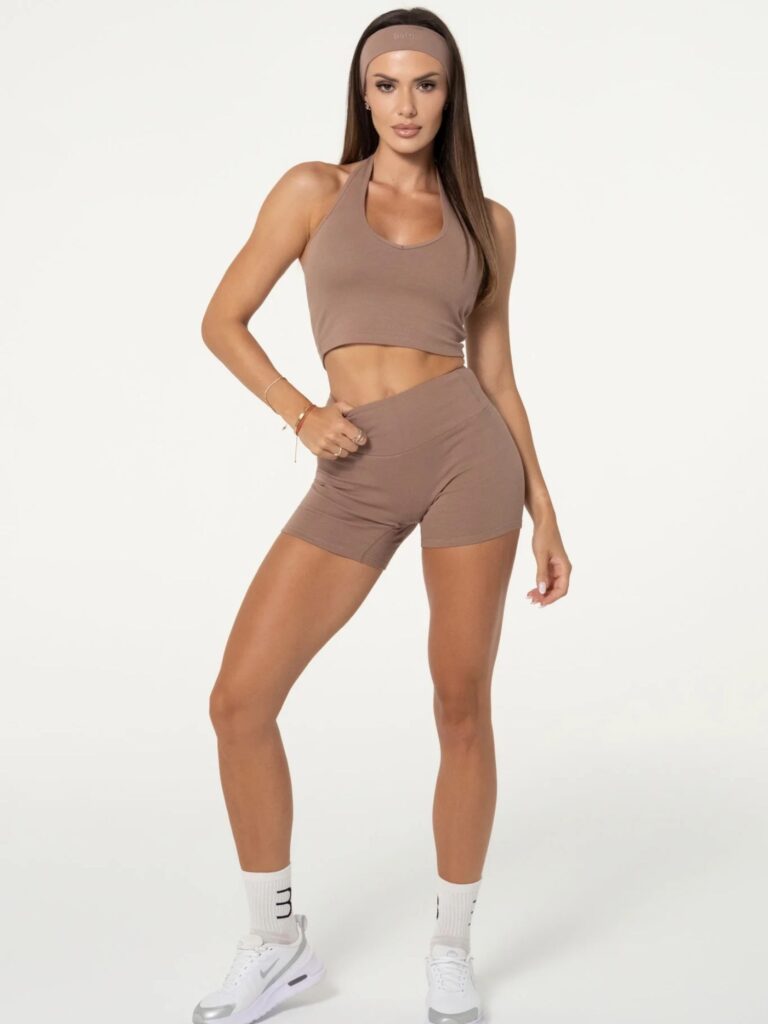
Natural fibers like organic cotton, linen and hemp are typically safe from phthalates, while vinyl, faux leather, and plastisol screen prints have a higher risk.
Activewear without Phthalates

The risk of chemical absorption through the skin
Activewear is not just the most prominent type of clothing to contain chemicals, but they are also the most likely to be worn at times when chemical absorption through the skin is most likely to happen.
During exercise (aka, the time you’re wearing activewear) the more you sweat and the hotter your body gets, the more you are making your skin available to absorb the chemicals from your clothes.
Oily substances in our sweat strip chemicals from our clothes and ready them for skin absorption. And as your body gets hotter, your pores open up and increase your dermal absorption rate of chemicals by 50%.
With compression-gear, like performance-enhancing activewear, they rub more closely on the skin, creating micro-abrasions that too compromise your skin’s barrier.
So if you’re wondering how important it is to be shopping with intention when it comes to your workout clothes, it’s important to keep in mind that working out is when you are the most vulnerable to what is on your skin.
Skin-safe activewear to add to your cart
You know the buzzwords to look out for warning signs. But what should you look for that signals that clothes are skin-safe?
The three most common certifications that you might see on clothing tags that indicate that they’re toxin and chemical-free are OEKO-TEX Standard 100, GOTS (Global Organic Textile Standard) and Bluesign.
Even if you don’t want to throw out your entire closet of activewear, it may help to set a standard for future shopping by buying from brands that are known for non-toxic clothing like MATE the Label, Pact or LNDR.
After all, wellness starts with intention. That doesn’t stop at what you eat and how you work out, but also includes the choices you make in your daily life, like what you wear. If you’re also all in on your wellness journey, remember that your activewear should be a part of it.