
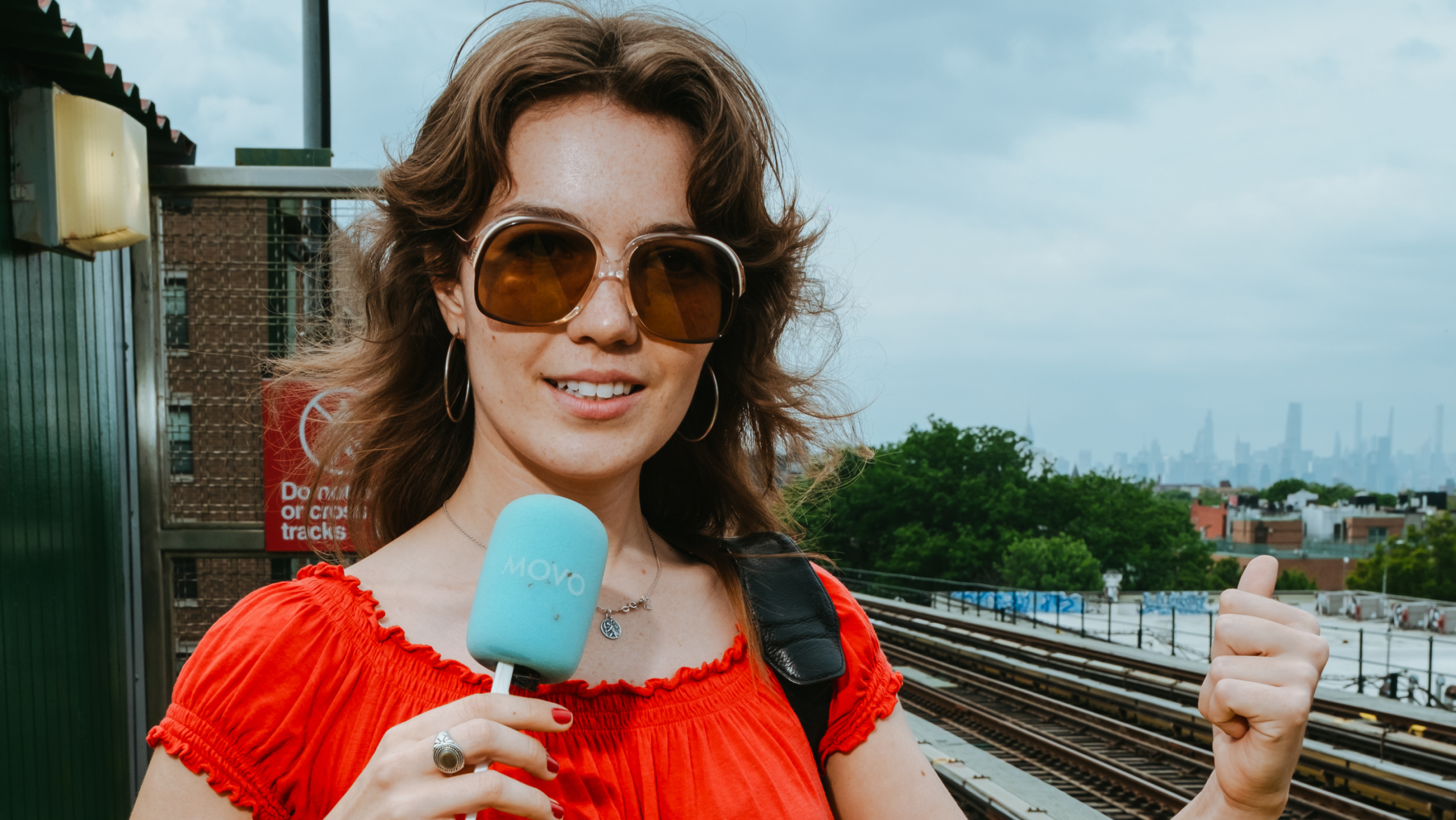
Can it Third Space? Ask Madison Rae
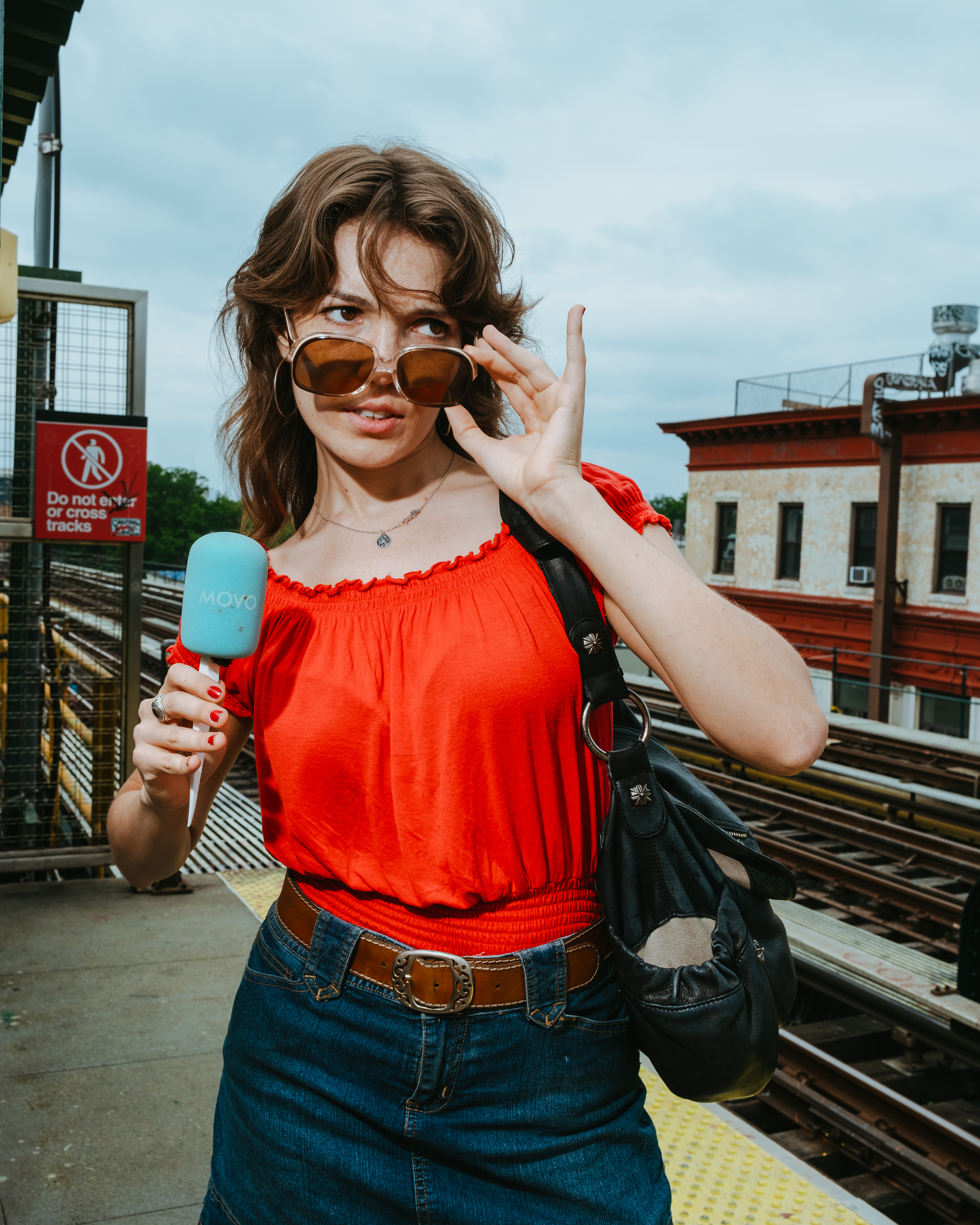
Photos by: Luis Eduardo Suarez
Third places have generated a lot of chatter online this year. Through the rise of community groups, run clubs, social girls’ clubs and more being marketed to us daily, the push and pull it takes to go out and be a part of these communities seems more accessible and important than ever.
Madison Rae’s ‘Can it Third Space’ series garnered millions of views on TikTok this year. A part of the series documents her time while on a short trip in Denver.
Currently, Madison is located in Fort Myers, Florida and is on a mission to locate as many third places across the United States as possible. “I love the U.S., and wherever I’m at is where the video will be made,” she said.
But what is a third place? Madison breaks it down as this: “In sociology, it refers to places where we go to socialize. So the first place is our home. The second place is work. And the third place is neither of those two. And it’s somewhere that we go to form a community where we go to form a sense of self.”
After multiple visits to the hospital for what felt like a heart attack, Madison was assured she was healthy, just incredibly stressed. With that, she quit her corporate graphic design job. Moving back home is a humbling experience for anyone who has found themselves back on that familiar doorstep. After spending most of her 20s traveling, working out of hostels and exploring the U.S. through van life, Madison found it was time to wind down and prepare herself for her next adventure.
“I am a big believer (and I think everyone is), but you need to reach a low in order to move on, or go to the next step,” she said.

Inspired by the book, The Great Good Place by Rae Oldenburg, Madison is actively learning through her series that third places are on a spectrum. They aren’t all the same because Third places are built on like-minded ideas and individuals.
“Would you find a cowboy checking out the hip new matcha cafe? Probably not! He’s most likely a local at a dive bar,” explained Madison. These places give us a sense of identity, and oftentimes our likes, dislikes and our interests are tied to these spaces.
While discussing what makes something a third place, from a local coffee shop to Chuck E. Cheese (true story, Madison took her series to her local Chuck E. Cheese), she also pondered the idea of the internet being a third place. “It’s here, and we have it, but it can’t be your only space,” she said.
With more than 6 billion people online and constant access to social media, we’ve built our own digital third places, spaces that often evolve into echo chambers. While we can all agree that nothing will ever replace a human-to-human connection, it’s also so natural to be online all the time.
For Madison, she argues that nowadays, “You need to get online to get offline.” Her series thrives on that statement. Viewers from around the nation, or whichever state she’s currently traveling in, comment on her videos advising her where she should go next. Her series ultimately gives local businesses a well-deserved spotlight while also encouraging viewers to get out and find a third place of their own.
But are third places a dying breed? Madison argued that, because of the way our culture thrives on consumerism and capitalism, it’s hard to post up at a bar or a coffee shop for hours on end to bond with community without feeling the pull of having to buy several drinks for every hour you are taking up space.
Madison referenced how in London, you can walk into a pub, buy one drink, and stay there for hours on end. This comparison led us to coin the term capitalist guilt. This guilt of having to buy, spend money, or monetize your presence is a huge obstacle for many to feel comfortable winding down in a place that is not home. Madison, like many of us, has had so many moments when we are thinking about our wallets more than we are thinking about the company around us.
While it’s important to support local, especially with the rise of restaurant and bar closures in Denver this year (Noble Riot, we miss you!), the larger question remains: How can businesses and patrons strike a balance of cultivating a reliable place to gather and sustainably investing in the spaces we love?
Regardless of where the answer lands, our generation and the generations to come must understand the value of community and have real access to it. Third places offer more than a place to pass time; they create opportunities to encounter differing perspectives, to sit with nuance, and to participate in the small, often life-shifting moments that shape how we see the world.
Through her study of third places, Madison also shared how these spaces are therapeutic, and the act of togetherness with like-minded people is essentially free therapy.
“If you just have your two spaces, your home and your work, you’re putting so much pressure on your family to be everything,” she explained. She further explained how only having work and home can also limit yourself, when you introduce a third place – a gym, library, a bar, whatever that may be – it’s immersive and introduces a sense of play where you truly have no choice but to leave all your problems at the door.
“I feel like in the U.S., we do not give that much importance to just relaxing and talking to people and just existing to exist with our fellow neighbors,” said Madison.
Our society, from conception, was brought up on hustle culture; we thrive off of the daily grind. We see gathering with others as a treat, not a necessity. For some who are really stuck in the loop of the grind, communal activities are seen as unproductive and a waste of time. The lingering guilt in the back of so many minds screams louder and louder, “I should be working on something.”
Loneliness is a growing epidemic. Madison’s research also led her to the U.S.Surgeon General’s Advisory study on loneliness, stating that “lacking social connection can increase the risk for premature death as much as smoking up to 15 cigarettes a day.” This study is what ultimately led her to more research and to start her series.
For Madison, this series has allowed her to explore her own hometown and other cities across the U.S. while constantly finding the answers to so many questions we all have. Why is everyone so lonely? Does America have third places?
“America, first world country, right? We have money. We have all these people. We have driven people. Why is this a problem? We should, out of everyone, theoretically be better. But it is like, they’re playing chess with us because if they make us sad, separated, we spend more,” she said.
Another pondering question we all have is, why do so many have this fear of being perceived? Why is it that trying new things feels embarrassing, especially when we try them alone? Taking risks and stepping out into the unknown will always be an uncomfortable experience, at least for the first few times. It’s a muscle that must be exercised, and in those moments that feel uncomfortable or scary, for Madison at least, she reminds herself that she’s done much harder things.
“Make that little dash between your birth and death year something radical, try to push yourself,” she said.
When it comes to a third place, trying to find your space, your community and a sense of belonging will never be an experience you’ll regret. Madison urges that in order to find your third place, oftentimes it doesn’t happen on the first try. Investing in something new allows us to show ourselves evidence that we can find something beyond our own fears, beyond what’s convenient or our comfort zones.
In a culture that prizes productivity over presence, Madison’s ‘Can it Third Space’ feels less like a viral series and more like a quiet call to return to ourselves, and to each other.
Third places don’t ask for perfection or hustle; they simply ask us to show up. In finding them, we reclaim the right to exist beyond work and home, beyond metrics and monetization.
The future of community isn’t about reinventing connection, but remembering it and choosing, again and again, to take up space where life happens in between.
“For anyone looking for a third space, it is one of the most important investments in your life. Once a week, please go out and you will be happier.”

Jordan McClendon
Located in Denver, Colorado, Jordan is a multi-talented individual passionate about content strategy and communications. Jordan's creative drive led her to The Fashion Institute of Design and Merchandising in Los Angeles where she obtained a degree in fashion design. Eager to learn more about media and the editorial world, Jordan also received a degree in Communications. After graduating Jordan spent two years crafting her social media and strategy skills at numerous beauty, haircare, F&B, and lifestyle companies. Jordan is thrilled to now work in PR where she can combine all her love affairs with strategy, social media, and media relations as well as learn new skills to take on while navigating the world of PR.