


Don’t Strip Our Rights Needs Denver’s Help
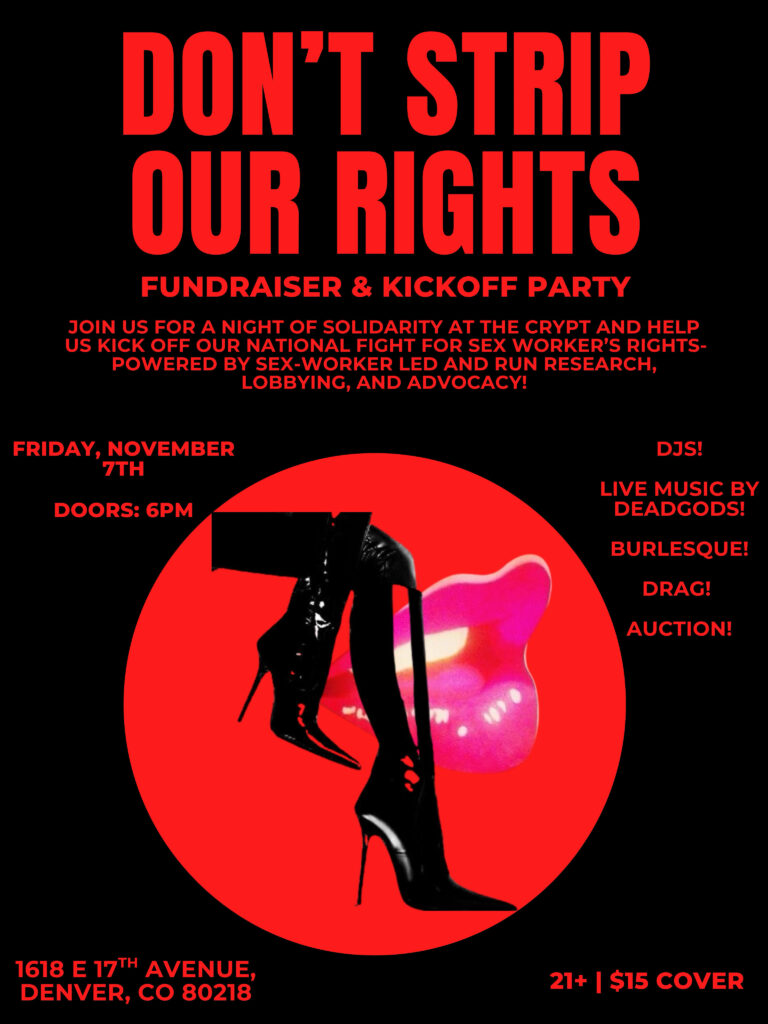
You may have seen a flyer or two circulating on social media or on bulletin boards across Denver with bold red text reading; Don’t Strip Our Rights. This Denver-based organization is fighting for sex workers’ rights and exposing the controversy of the industry one research project at a time, and now they need your support through fundraising.
Devynn Dewey, who is currently completing her degree in Neuroscience, Law and Bioengineering, started Don’t Strip Our Rights in 2020 as a non-profit. Dewey’s experience with sex work, mistreatment and her passion to use her brilliance to help her greater community culminated in this direct stand for sex workers’ rights. For the past five years, Dewey has established her mission in the Denver area and built the team that exists today. Don’t Strip Our Rights, DSOR, is officially a 501(c)(4) social welfare organization, which is one more step towards Dewey’s goals of change.
“Our 501(c)(4) status gives us the ability to build political muscle,” explained Dewey, who is determined to demand political repercussions for herself and the communities she is a part of. Now, Dewey works alongside two lobbyists, a Washington, DC board member and a research committee.
“Our focus is on bridging the gap in research about sex workers and restoring trust in our community with research. We lobby for legislation that protects sex workers, and we want to help offer our resources to other sex worker organizations for lobbying on legislation they’ve been working on,” said Dewey. “Our community outreach and education is about wage theft, violence, safer workplaces, harm reduction, and research concerning sex workers. It’s for the workers, by the workers.”
“We are at a critical crossroads in this country,” said Dewey, “And we know that if we don’t continue to build these walls of protection for our community, we will suffer. It is legislate or be legislated for.”
While preparing to fight legislation and monitoring ongoing Denver trials, Dewey planned DSOR’s official kick-off party and fundraiser that will build stipends for the research committee and board members. Dewey also hopes to start a legal defense fund for any involved with DSOR who might be met with retaliation.
DSOR is in the process of forming a research question that they can investigate with their current resources. This question will likely involve “the effects of criminalization and wage theft and the many psychological, sociological, and physical effects that can form,” said Dewey. This project will officially begin when DSOR publishes a white paper policy brief.
Outside of following along on social media and attending events like the November 7 fundraiser at The Crypt, there is more that we can do to support sex workers and the ongoing fight.
“The best way [to help] is to listen to us and the organizations. Often, there’s a desire to assign us some sort of moralizing adjective in order to ‘validate’ us- consciously or not. We’re either ’empowered’ or we’re ‘dirty and evil.’ We are just workers, and to support sex workers is to support the intersectionality of liberation movements. Show up to our events, donate to orgs and tip workers, and don’t make us the butt of the joke or of some hyper-moralized object of puritanical projection. We aren’t a social media hot take- we are human beings who have been forced to bear the brunt of a moral weight that was never ours to carry in the first place. Labor rights for us are labor rights for everyone.”
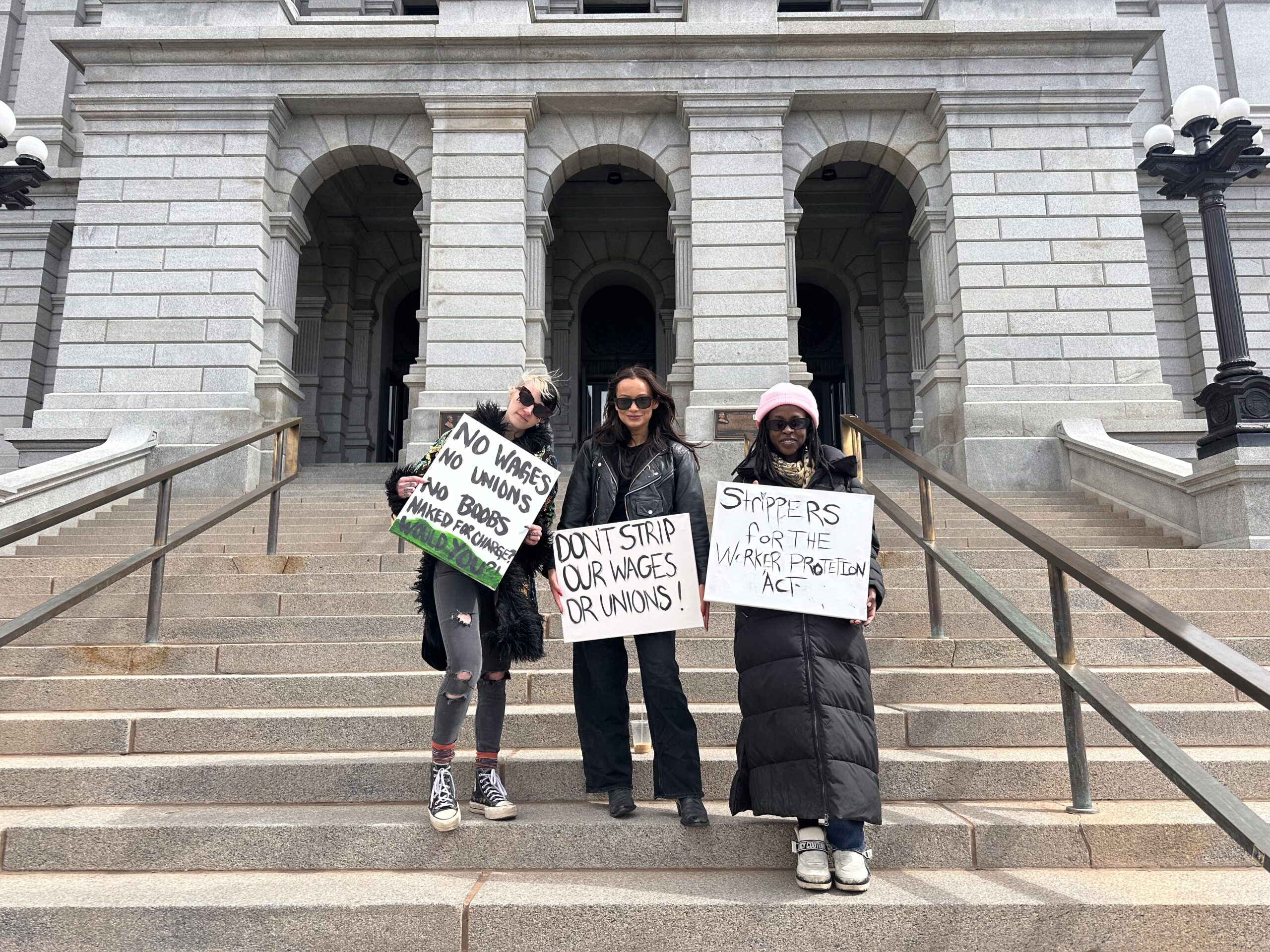
Within the industry of sex work, wage theft, criminalization and retaliation against workers who try to organize have created a perfect storm to halt the change so many desire.
“Right now, there’s a Denver Labor investigation into Denver strip clubs associated with wage theft. The legal process moves slowly, and we are still in the process of litigation, but keeping up to date with that and supporting those involved is a huge help. It’s very scary and stressful for many of us,” said Dewey.
In addition to reparations for wage theft already committed, Dewey is looking out for the experiences of sex workers in the future and all the factors that lead to immense difficulty and struggle.
“We want to address workplace conditions in strip clubs, and move towards a decriminalization model and protections for street-based sex workers who face violence and stigma,” explained Dewey. “We want protections for all sex workers.”
The history of sex work in Denver is lengthy and complicated. Though sex workers helped the economy in the 19th and 20th centuries, there were high rates of suicide, trafficking and racial segregation.
“It’s important we tell their stories openly and honestly, not glamorously, so that we remember what the ultimate goal is and why it’s important,” expressed Dewey.
Dewey’s current focus, leaning into the effects of social stigma and criminalization of sex workers, is a modern and tangible approach to the centuries of pain behind the line of work. With her personal understanding of the industry and the severity of legislation and social impact, Dewey is on track to make massive changes in Denver, and hopefully beyond.
“Sex work has impacted my life profoundly- both the good and the difficult. It can be really emotionally taxing. It’s physically exhausting,” emphasized Dewey, “The first community I ever felt was in the locker room of a strip club. I have felt every emotion under the sun in those locker rooms. It’s the reason I can be in school, the women in those locker rooms helped me survive, it’s a community that invigorated me with purpose and righteous anger. Even when I hang up the heels one day- a piece of me will always live in that locker room.“

Victoria Glidden
Born and raised in New Hampshire, Victoria is on a mission to explore nature, art and music. After obtaining her degree in literature, philosophy and religious studies at Willamette University, Denver seemed like an obvious destination and has proven to be quite the home. Victoria is deeply connected to the music scene in the city and is always on the hunt for new music.